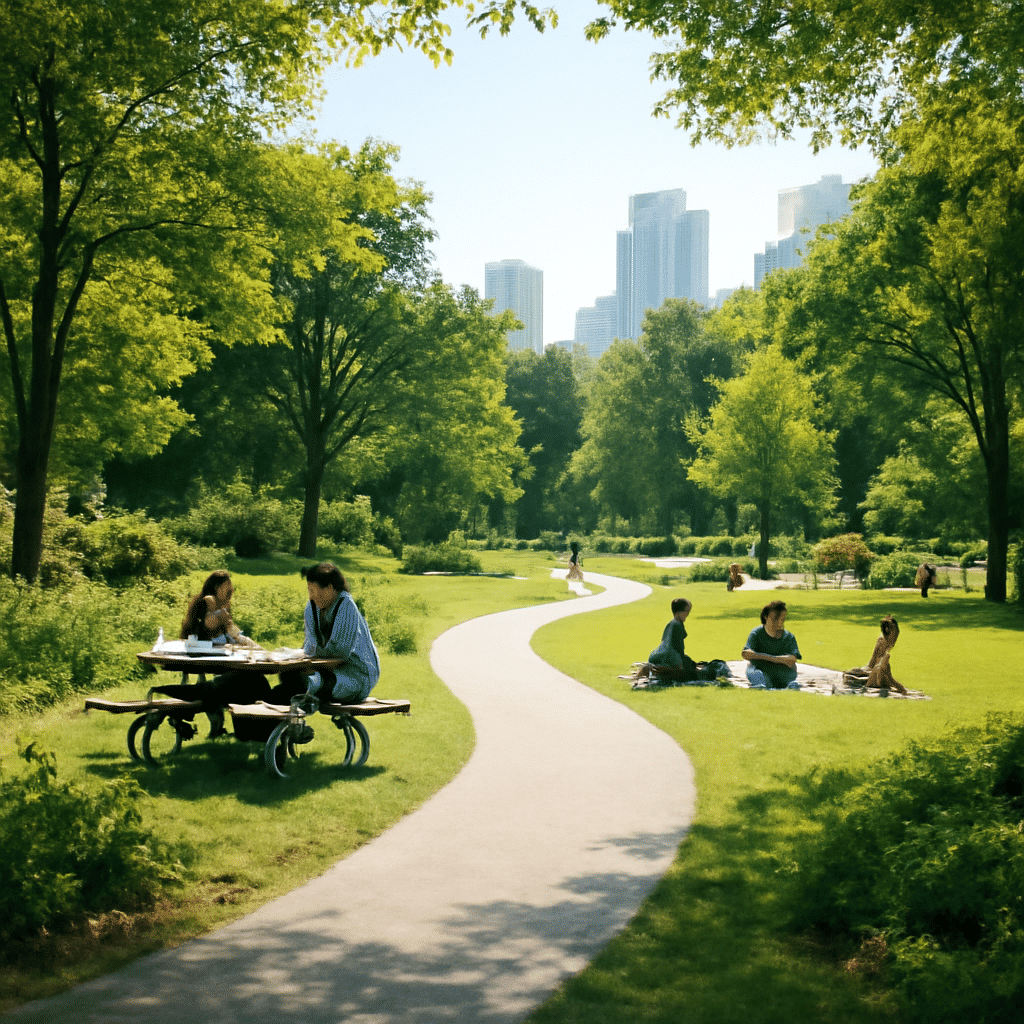
Urban areas are often characterized by towering skyscrapers, bustling streets, and a fast-paced lifestyle. However, nestled within these concrete jungles, urban green spaces serve as essential refuges, offering a breath of fresh air and a touch of nature amidst the hustle and bustle. These green lungs are not just mere patches of grass and trees; they are vibrant ecosystems that play a crucial role in enhancing the quality of life and promoting sustainability.
Green spaces in cities come in various forms, from expansive central parks and community gardens to small pocket parks and rooftop gardens. Regardless of their size, each of these spaces contributes significantly to environmental health and urban living. One of the primary benefits is their ability to improve air quality. Trees and plants absorb carbon dioxide and produce oxygen, helping to reduce pollution and combat the urban heat island effect, which is caused by concentrated human activities and infrastructure that retain heat.
Beyond environmental benefits, urban green spaces also improve mental and physical well-being. Numerous studies have shown that access to nature can reduce stress, improve mood, and enhance cognitive functions. Parks and green areas provide residents with a serene environment to relax, exercise, and socialize, promoting a healthy and active lifestyle.
Moreover, these spaces foster a sense of community. They serve as gathering spots where people from diverse backgrounds can come together, share experiences, and build stronger social bonds. Community events, local markets, and recreational activities often take place in these green areas, making them integral parts of urban social fabric.
In addition to their environmental and social benefits, urban green spaces are vital components of sustainable urban development. They contribute to biodiversity by providing habitats for various plant and animal species, which can coexist with urban infrastructure. The presence of diverse flora and fauna within cities helps maintain ecological balance and encourages residents to engage with nature conservation efforts.
Urban planners and local governments recognize the significance of integrating green spaces into city layouts. Striking a balance between urban development and natural conservation is essential to ensure that these green lungs can thrive and continue to benefit urban populations. Innovative solutions such as green roofs, vertical gardens, and smart park designs are being implemented to maximize the potential of limited urban space.
Furthermore, the creation of green spaces aligns with global sustainability goals, supporting initiatives like the United Nations' Sustainable Development Goals, which emphasize environmental preservation and sustainable cities. By investing in and prioritizing urban greening projects, cities can contribute to a greener, more sustainable future for all.
In conclusion, urban green spaces are indispensable assets in modern cities, providing myriad benefits that extend beyond their physical boundaries. They are crucial for promoting environmental sustainability, enhancing public health, and fostering community resilience. As we continue to shape our urban landscapes, it is imperative to prioritize the integration and expansion of these vital green lungs, ensuring that every city dweller can enjoy the many benefits they bring.